Our accolades
 Semi-Finalist
 Finalist
 Category Winner
Three competitions, three milestones.
Each round pushed EcoBin further — sharper technically, more credible commercially, and more ready to scale.
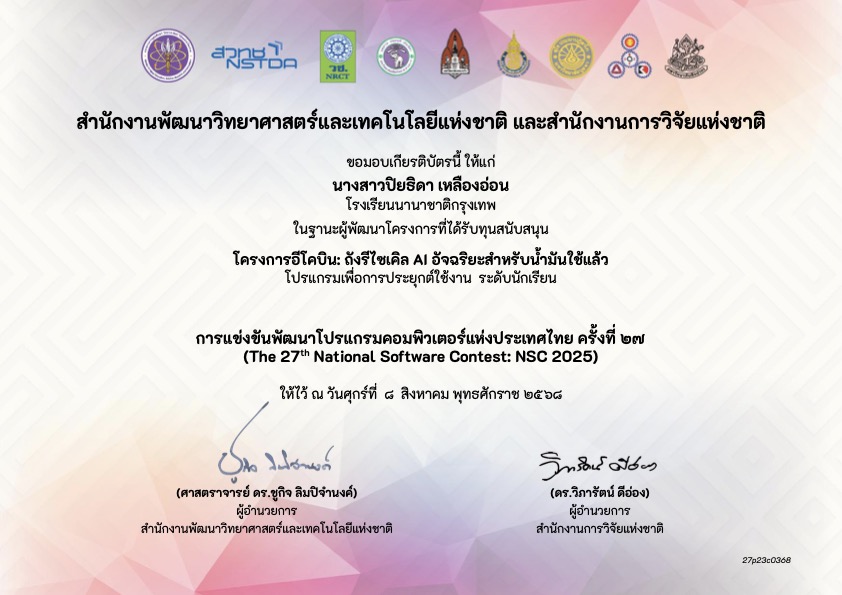
August 2025
National Software Competition 2025
National Science and Technology Development Agency (NSTDA), Thailand
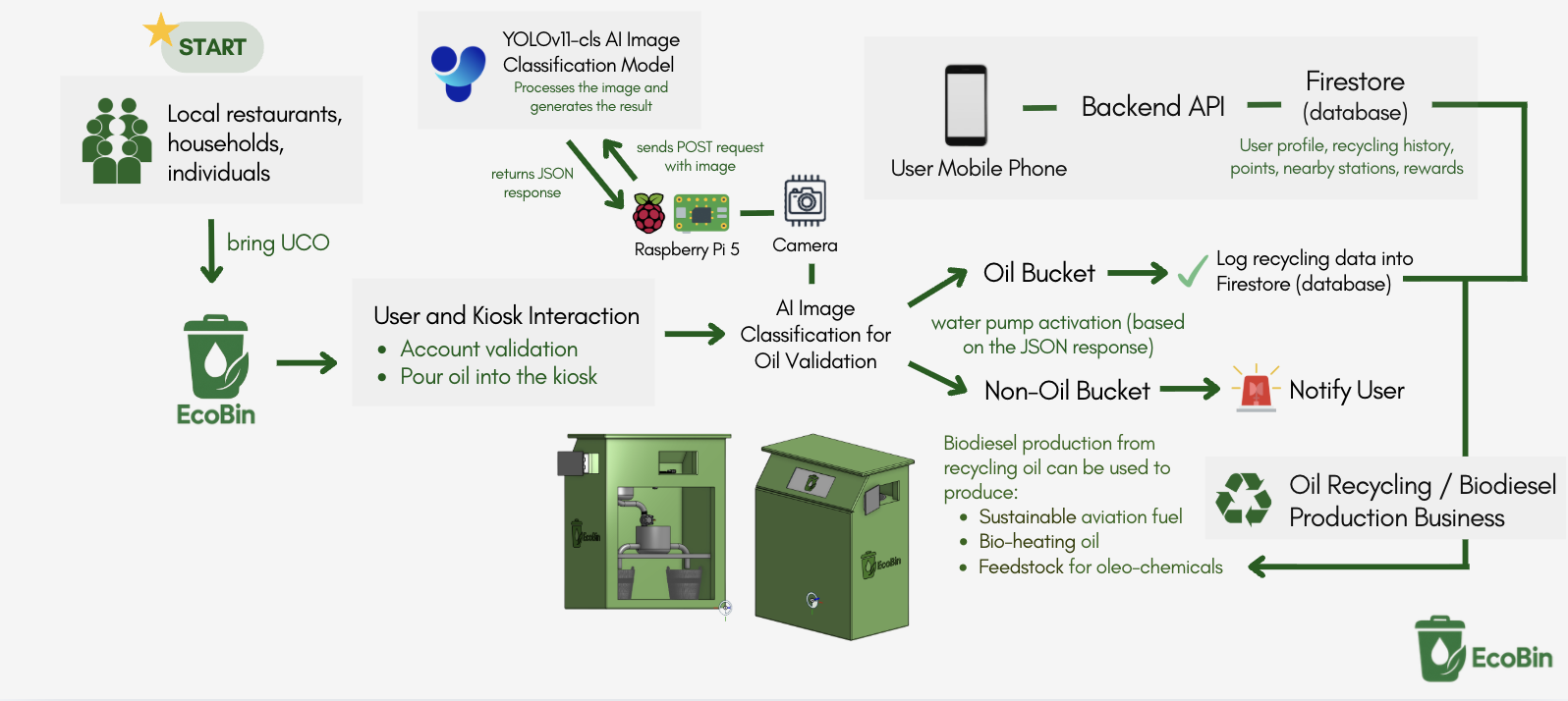
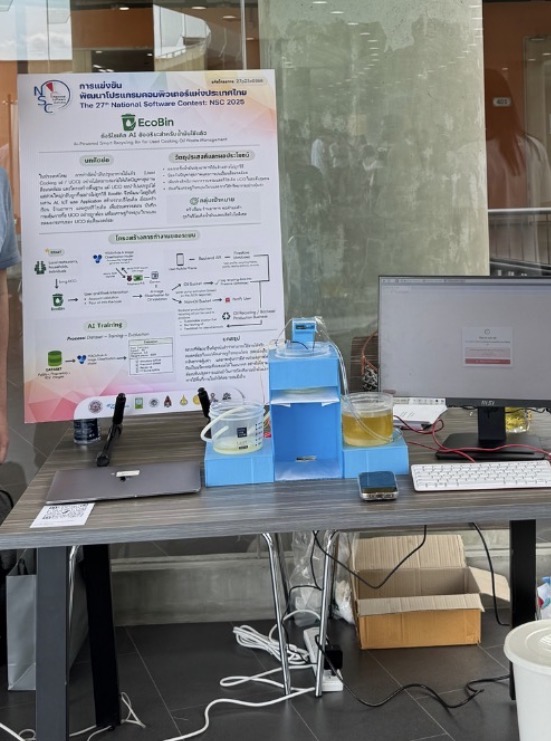
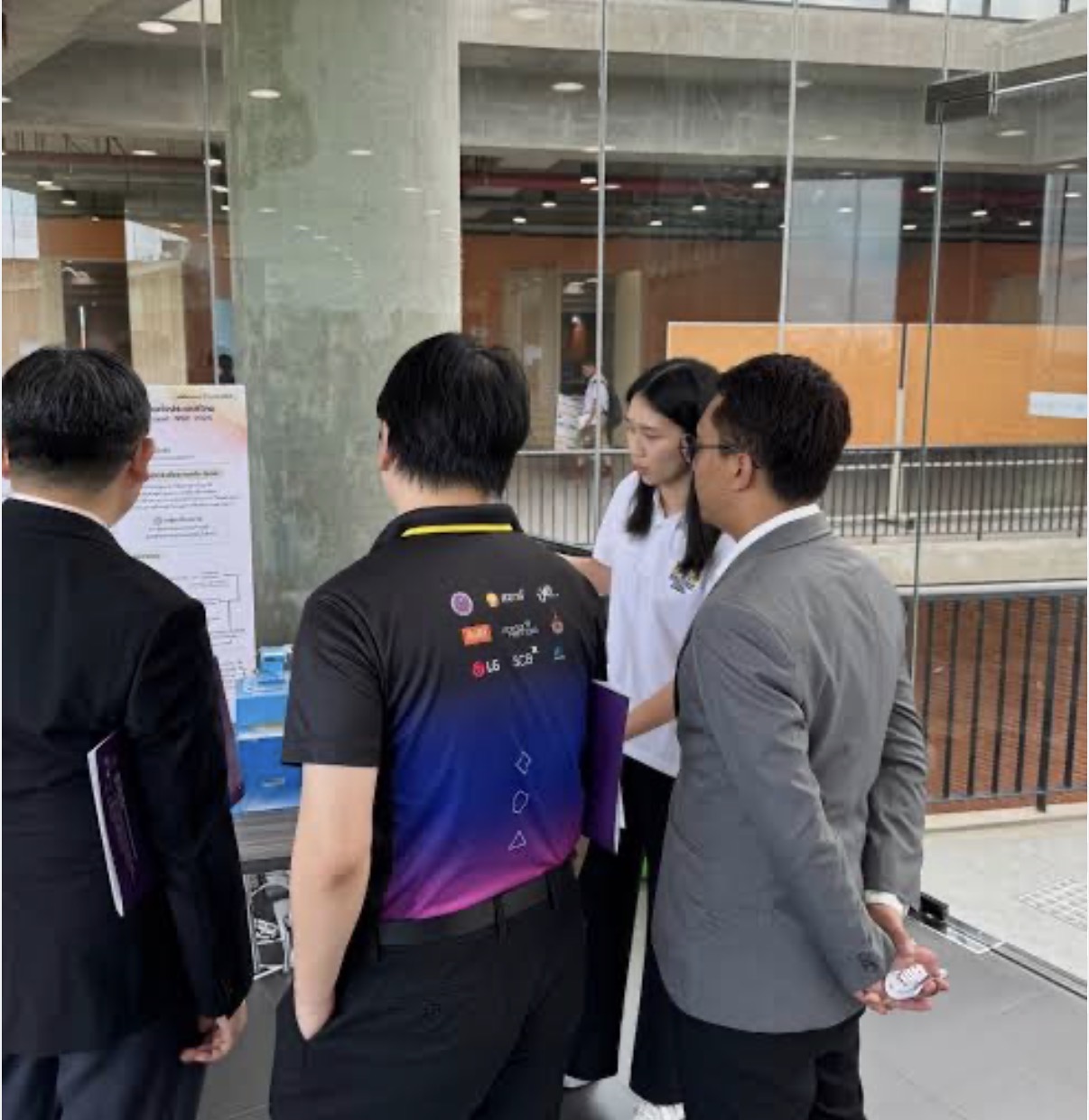
EcoBin advanced through three progressive rounds — preliminary, regional representative, and semi-final — competing against software projects from across Thailand.
3 rounds advanced
$300 development grant
November 2025
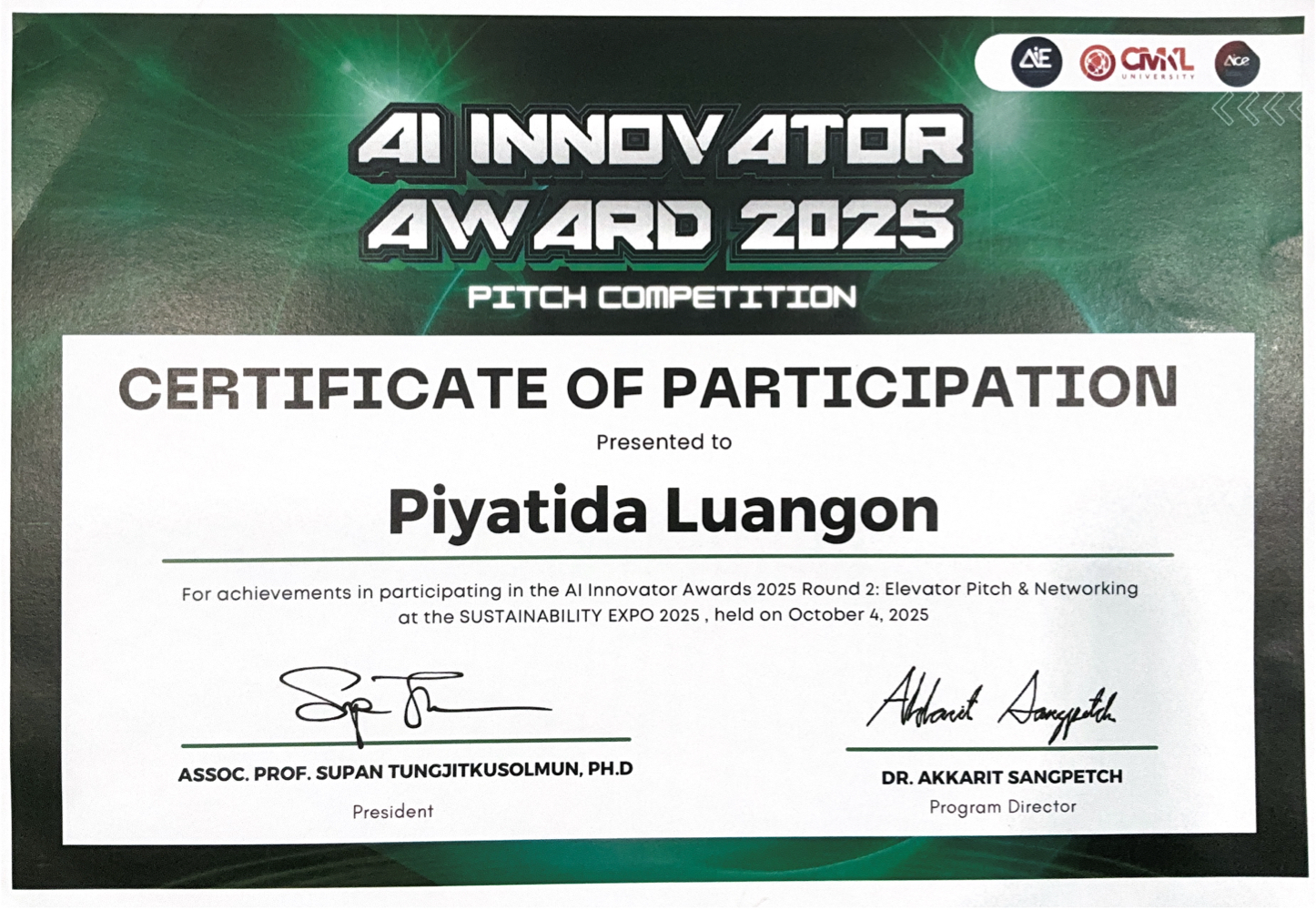
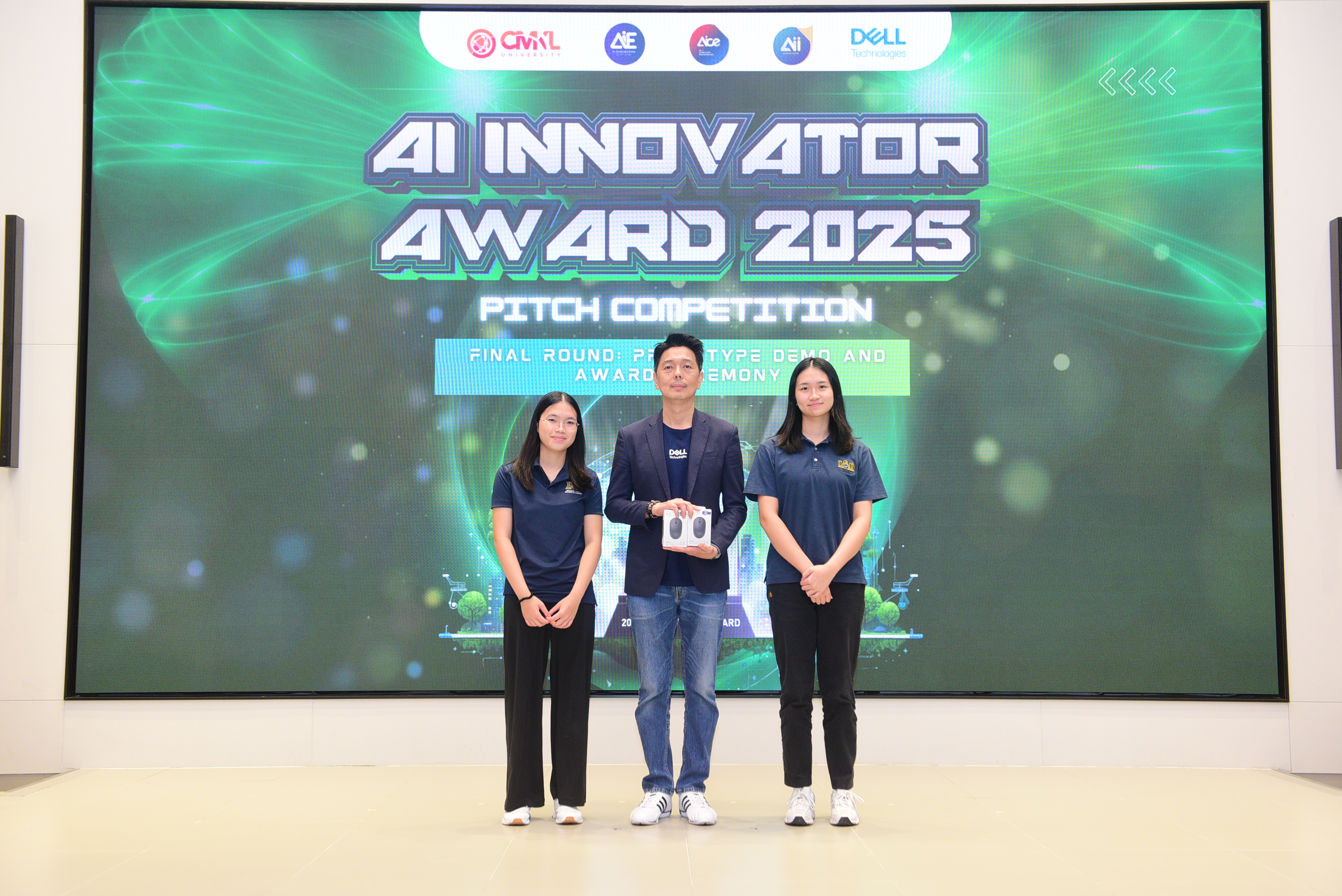
AI Innovator Award 2025
CMKL University, Thailand
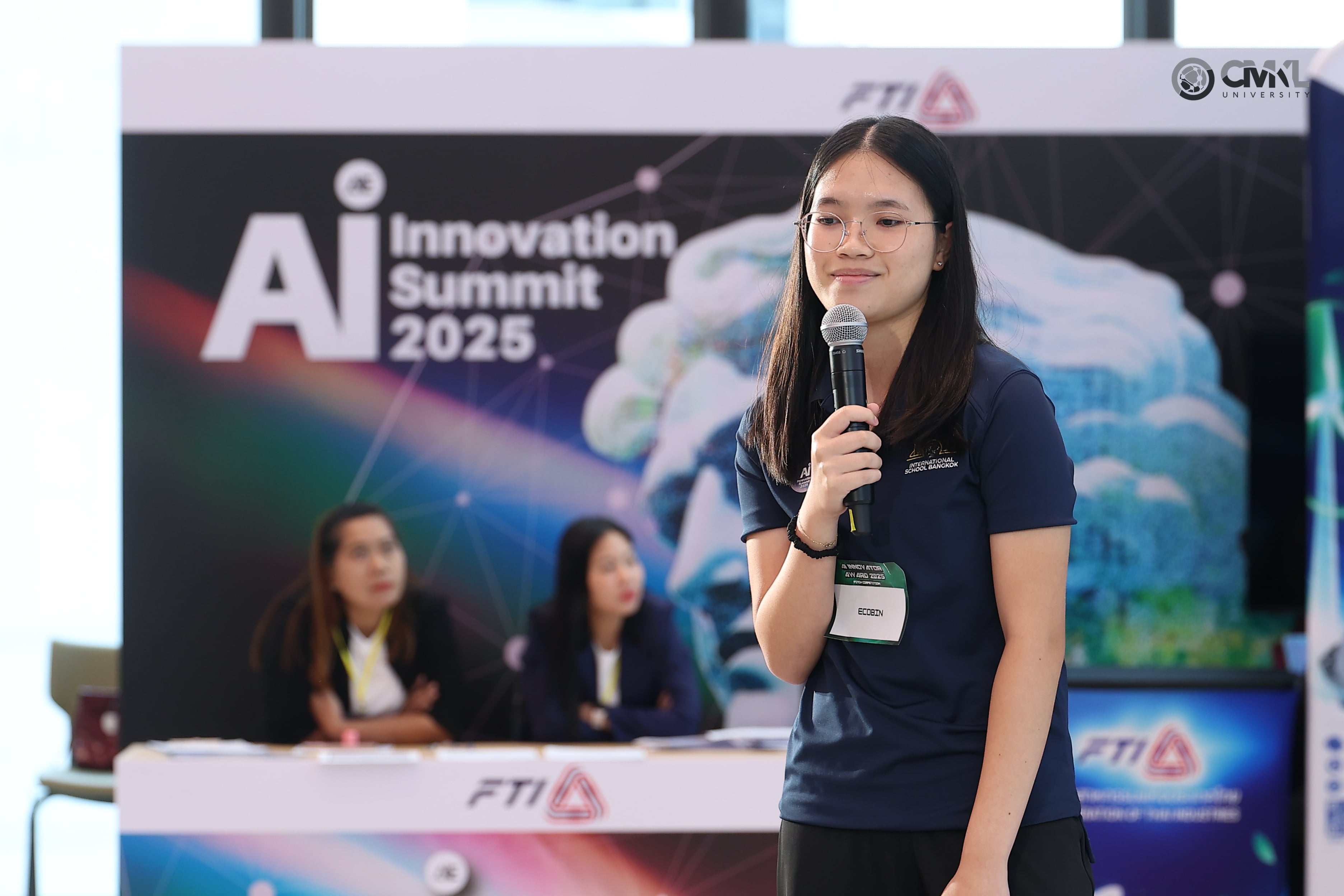
EcoBin was selected as a finalist and presented at the AI Innovation Summit 2025 and Sustainability Expo 2025, earning a scholarship offer from CMKL University through mentor recognition.
AI Innovation Summit 2025
Sustainability Expo 2025
CMKL scholarship offer
May 2026
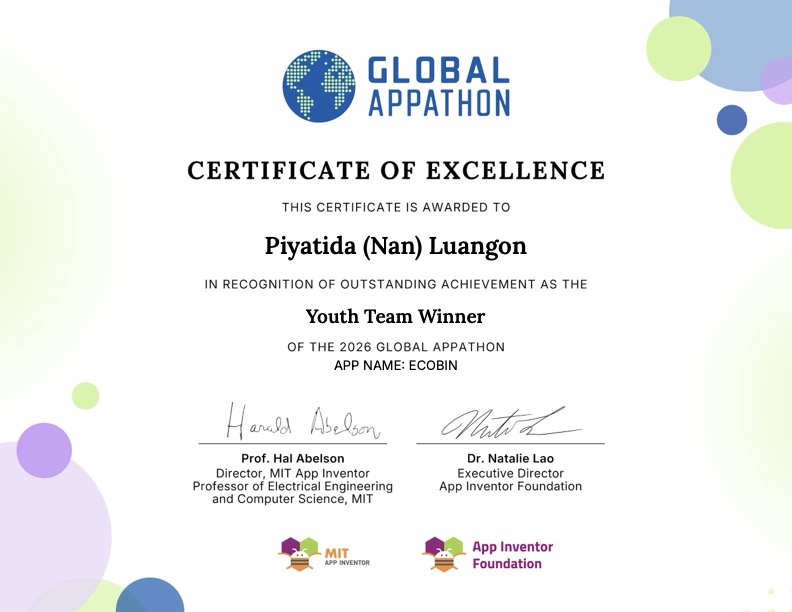
MIT Global Appathon 2026
MIT App Inventor Foundation
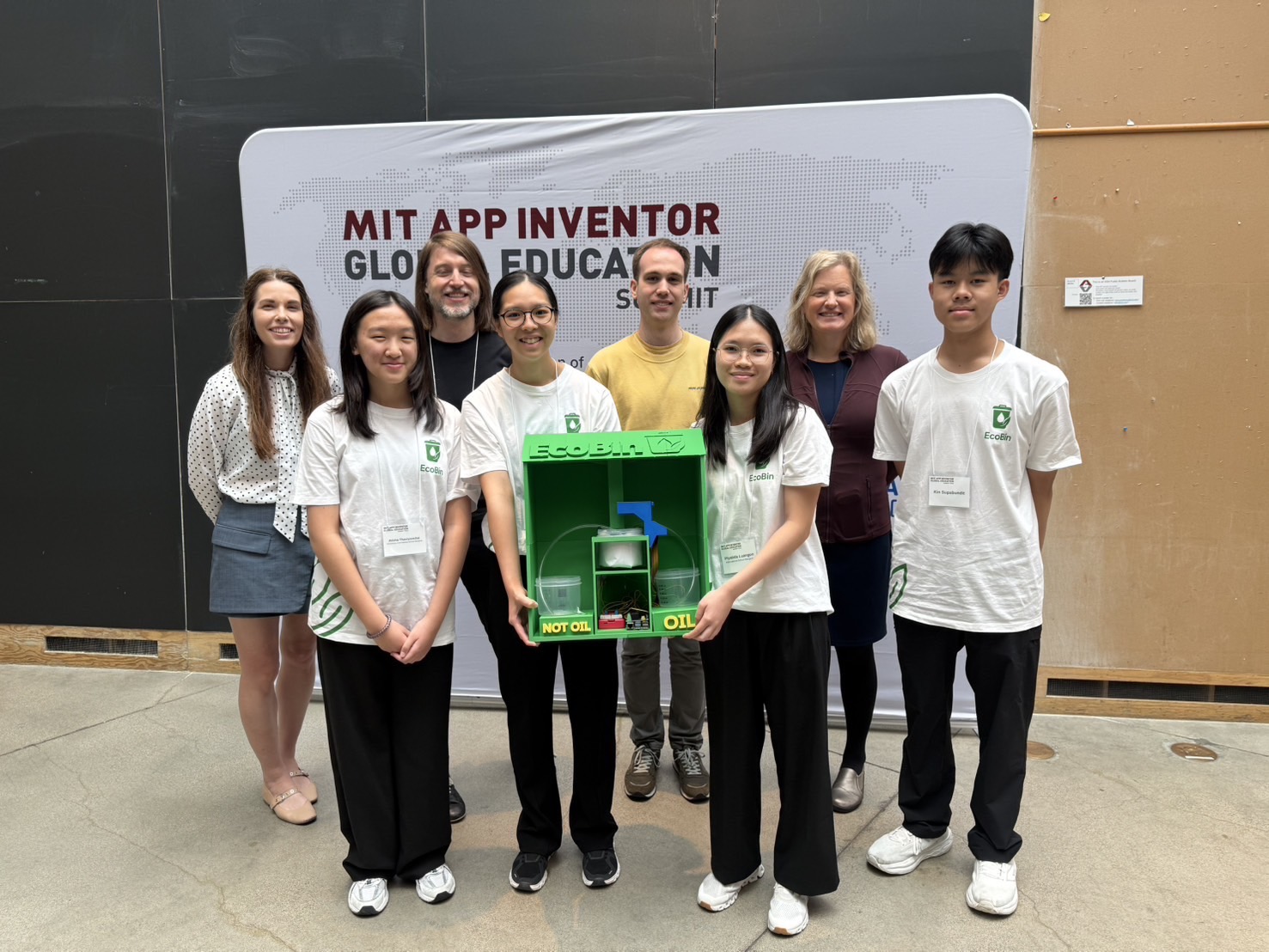
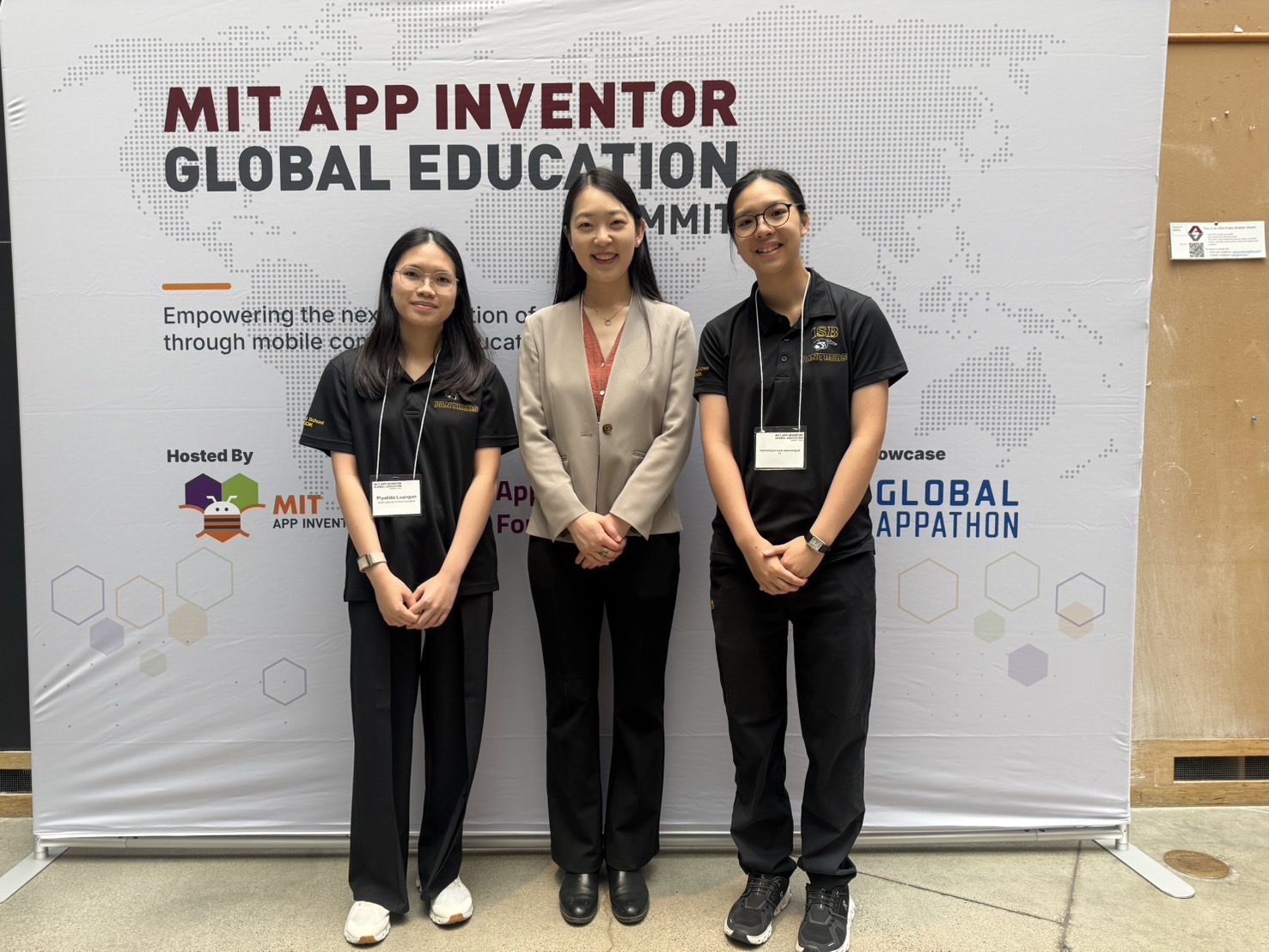
EcoBin won the Youth Team Category, competing against 2,146 teams from 141 countries, and was presented at the MIT App Inventor Global Education Summit at MIT.
2,146 teams
141 countries
Presented at MIT